








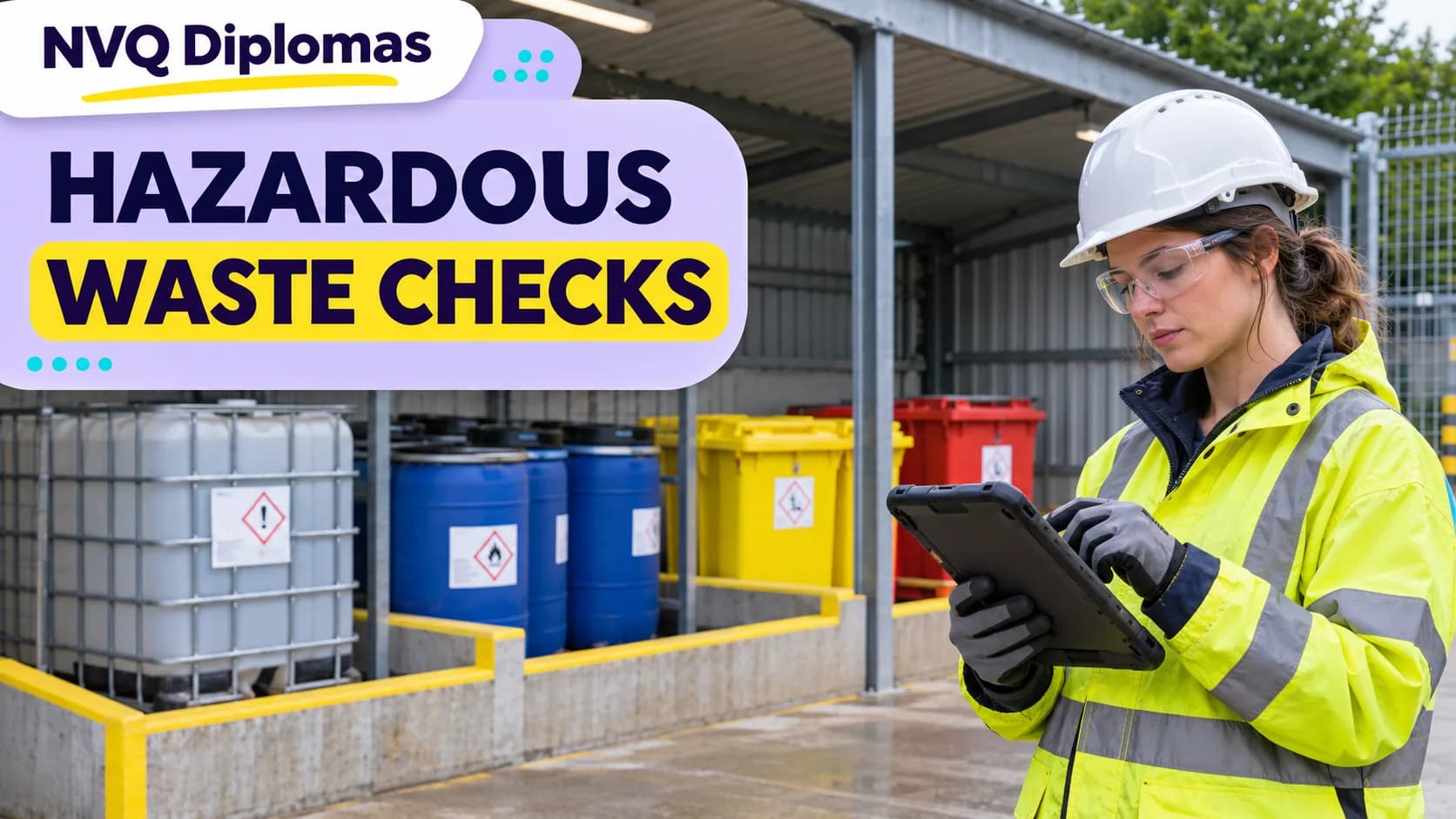
Hazardous Construction Waste: Identification, Segregation and Records
Manage hazardous construction waste by identifying what it is, keeping incompatible streams separate, arranging safe storage and using an authorised collection and destination route with accurate records. A skip colour, product label or verbal assurance from a collector does not replace classification. Unknown material should remain controlled while a competent assessment is arranged.
This guide addresses site-management decisions in England. Scotland, Wales and Northern Ireland have their own regulators and procedures. It is not an asbestos-removal method, sampling instruction or permission to mix or treat waste.
Identify the waste before choosing its destination
Hazardousness depends on the waste and its properties. The Environment Agency’s construction-waste classification guidance provides codes for different materials and distinguishes hazardous from non-hazardous entries. A code must describe the actual waste, including contamination; do not select it solely because the broad material name sounds familiar.
Build an inventory from the work scope, surveys, material history and relevant product information. Note where the waste arose and whether it has been mixed or altered. A safety data sheet for an unused product can help identify constituents, but it is not automatically a complete classification of contaminated or mixed waste. Specialist assessment and appropriate testing may be needed.
Separate streams without creating a new exposure
The Environment Agency’s segregation and mixing guidance explains restrictions on mixing hazardous waste, including dilution and mixing with other material. Do not add clean rubble to make a contaminated load appear less hazardous. Where waste has already been mixed, obtain competent advice on the legal and safe route rather than sorting unknown material by hand.
| Check | Question to resolve | Record |
|---|---|---|
Identity uncertain | What information is missing before classification? | Origin, suspected contents, survey reference and assessment owner. |
Storage container | Is it compatible with the contents and suitable for the exposure? | Container identity, condition and inspection plan. |
Segregation | Could adjacent wastes react, leak or contaminate each other? | Accepted separation layout and access controls. |
Collection route | Can this carrier and destination handle this particular waste? | Registration and permit checks, including accepted waste types. |
Documentation | Does the description match what is actually leaving? | Classification evidence, consignment details and receipt/return. |
Make storage a planned operation
Provide a secure location with suitable containers, identification and arrangements to prevent escape or pollution. The GOV.UK storage guidance explains keeping different types separate and protecting storage appropriately. Design containment, weather protection and fire precautions for the materials and quantities actually present; one bunding or spacing rule does not suit every waste stream.
Keep routes available for inspection and collection. Assign someone to check containers, labels, damage, leaks and unauthorised additions. If a container is compromised, restrict access and activate the agreed response plan. Do not transfer its contents into the nearest empty drum without checking compatibility and controlling exposure.
Control the work that produces and handles waste
Hazardous waste can introduce dust, fibres, vapour, skin contact, sharp objects, fire or reaction risks. Avoid opening unknown containers, sniffing material to identify it or breaking suspect sheets for convenience. Stop disturbance of suspected asbestos and obtain a competent assessment. HSE’s asbestos-material guidance describes where asbestos may be found and why some work needs licensed specialists.
Use the relevant product safety data and waste assessment to define protective equipment, ventilation, containment and emergency measures. No chemical product is specified for use in this guide, so there is no single SDS that can safely stand in for the actual wastes. Keep people clear of collection vehicles and lifting activities. Spill response must be appropriate to the substance; untrained workers should not improvise neutralisation or cleanup.
Check the carrier, site and paperwork separately
For England, GOV.UK’s producer and holder guidance requires classification, safe separation/storage, authorised businesses and a register retained for three years at the producing or storage premises. Check both the carrier’s registration and the receiving site’s authorisation for the specific waste. One does not prove the other.
The hazardous-waste consignment guidance explains that the note accompanies the waste to its final destination and identifies the parts completed by different parties. Verify the description, quantity, container information and relevant classification details before collection. Keep the applicable note, consignee returns and records of discrepancies or rejected loads together. A booking email is not evidence of final acceptance.
An illustrative unknown-paint problem
Imagine an older refurbishment produces part-used tins with unreadable labels. The site knows where they were found but not their contents. The useful action is to secure and record them, gather available history and ask a competent waste specialist what assessment is required. Pouring them into a single drum would destroy traceability and might introduce incompatibility. The example illustrates the decision process; it does not classify any real paint waste.
Close the waste record only when the expected documents and any discrepancies have been reviewed. Track what remains unresolved and who is responsible. This complements general construction-waste segregation while adding the classification and record controls needed for hazardous streams. The hazardous-waste removal qualification offers relevant learning context, not authority to handle every hazardous material.
Scope and editorial method
This source-based guide was prepared with substantial AI assistance in research organisation and drafting. Primary references were checked on 20 November 2026. No independent technical review, named human contribution or firsthand project evidence has been verified. The featured image is AI-generated and illustrative. Examples are hypothetical. Use competent project-specific advice; this guide does not authorise design changes or hazardous work. HSE references concern Great Britain. Waste-law requirements described below concern England unless otherwise stated.
Frequently Asked Questions
No. Use the material’s origin, composition and relevant assessment. Similar-looking materials may need different classifications.
Do not dilute or mix it to change its apparent status. Follow the segregation rules and obtain competent advice.
No. Check the receiving site’s authorisation for the particular waste as well as the carrier.
No. The legal workflow described is for England. Check the relevant regulator for the other UK nations.