






LOLER Thorough Examination vs Routine Inspection: Key Differences
A LOLER thorough examination is a formal, detailed assessment of lifting equipment by a competent person, followed by a written report. A routine inspection checks condition and operation between examinations. Neither replaces maintenance or the operator's pre-use checks. A recent examination report is therefore one part of managing equipment safely, rather than permission to ignore a new defect.
This guide helps employers, supervisors and equipment coordinators in Great Britain distinguish the checks and organise the evidence. It does not teach examination techniques, set wear limits or authorise anyone to certify equipment. Northern Ireland and other jurisdictions have their own legislation and enforcement arrangements.
Four activities that answer different questions
Start by naming the activity correctly. Asking a supplier for a “LOLER certificate” can obscure whether you need an examination report, an inspection record or evidence of repair. The useful question is what assessment was performed, on which equipment and with what findings.
| Activity | Main question | Practical output |
|---|---|---|
| Pre-use check | Is there an obvious problem before this use? | Operator identifies and reports concerns |
| Routine inspection | Has deterioration affected safe operation? | Condition findings and action, recorded where required |
| Thorough examination | Are there dangerous defects or weaknesses in the lifting equipment? | Competent person's formal written report |
| Maintenance | What servicing or repair keeps the equipment in safe working condition? | Work completed and appropriate maintenance records |
HSE's employer guide to thorough examination explains how these activities fit together. For a lift truck, checking lifting components does not remove the need to address non-lifting systems such as brakes and steering. Confirm the scope of a combined inspection rather than assuming every component was covered.
What a thorough examination includes
The competent person determines the necessary examination methods for the equipment and its risks. These may involve visual and functional checks, measurement, internal access or additional testing. It is not simply a longer version of an operator checklist.
According to HSE's thorough examination guidance, routine load testing is not needed for most lifting equipment; some overload tests can damage it. The competent person decides whether testing is necessary using risk and relevant manufacturer information. Do not arrange an improvised proof load to “make sure” an uncertain item is safe.
Keep assessment separate from repair. A technician replacing a worn component has performed maintenance. Whether an examination is also needed depends on the equipment, the intervention and its effect on safety; obtain the competent person's advice before returning it to service.
When six months, twelve months or another interval applies
For regular in-service thorough examinations, the normal statutory intervals are six months for lifting accessories and equipment used to lift people, and twelve months for other lifting equipment. Alternatively, a competent person's examination scheme can specify appropriate intervals. An ordinary servicing schedule is not an examination scheme.
Calendar dates are only part of the decision. Examination may also be required after assembly at a new location or after exceptional circumstances that could jeopardise safety. First-use arrangements have specific exceptions concerning a recent declaration of conformity and equipment not assembled on site. Check the actual situation against HSE's LOLER Approved Code of Practice, L113, rather than treating every newly purchased item identically.
L113 is the second edition, published in 2014 with amendments in 2018; it is longstanding guidance, not a new standard. It distinguishes the Regulations, the Approved Code of Practice with its special legal status, and explanatory guidance. Manufacturer instructions inform safe use and examination decisions but do not displace applicable legal duties.
Who can inspect or examine equipment?
The required competence depends on the task. Someone able to recognise a damaged sling before use is not automatically competent to examine all crane systems. Conversely, a specialist examiner still needs the equipment history and relevant technical information.
For routine inspections, HSE's work equipment inspection guidance focuses on sufficient knowledge and experience to understand what to inspect, what defects matter and what action to take. Inspection scope and frequency should reflect risk, conditions and manufacturer recommendations.
A thorough examiner needs appropriate practical and theoretical knowledge and experience of the equipment. HSE also expects sufficient independence and impartiality; an external company is not always necessary, but the person should not assess their own routine maintenance work. A job title, training certificate or qualification alone does not demonstrate competence for every machine.
For people already doing this work, the testing, inspecting and thorough examination qualification describes workplace assessment pathways. Confirm that the actual specialism matches the role; enrolment is not authority to undertake statutory examinations.
A practical check before accepting hired equipment
Use the following original coordination checklist to identify missing information. It supports handover decisions; it is not an examination checklist or a replacement for competent assessment.
Match the identity. Compare the report with the equipment identifier and any separately supplied accessories. A report for a similar model is not evidence for this item.
Read beyond the date. Review the examination scope, defects, restrictions and next examination date. Ask about attachments and configurations that are not clearly covered.
Check subsequent events. Ask whether damage, modification, repair, relocation or extended storage has occurred since examination, and seek competent advice where safety may have changed.
Confirm ongoing arrangements. Identify who performs pre-use checks, any required intermediate inspections, servicing and defect reporting during hire.
Resolve gaps before use. Escalate missing evidence or uncertain condition to the supplier and responsible manager. Do not fill the gap with an unsupported signature.
Our guide to equipment selection and hire handover checks covers the wider handover process. Passing the paperwork check does not establish that the equipment suits the intended lift or site.
Records and defects: turn findings into decisions
A thorough examination report must contain the information required by LOLER Schedule 1. Check that it identifies the equipment, examination and next due date, and relevant defects and remedial timescales. A sticker or colour code is a useful identifier, not a substitute for reading the report.
HSE's INDG422 guide sets out different retention periods for different records in Table 3. Avoid one blanket deletion rule. Store reports so they can be retrieved, linked to the correct asset and protected against unauthorised alteration.
Where a defect presents an existing or imminent risk of serious personal injury, the examiner has immediate reporting duties and must send the report to the relevant enforcing authority. Other dangerous defects may have a specified remedial deadline. Follow the report's restrictions: equipment must not be used while an unsafe condition remains or beyond a stated deadline without the required remedy. HSE explains these duties in its reports and defects guidance.
Illustrative example: a hired hoist arrives with an examination report still within its date, but the receiving team notices impact damage. The sensible next step is to prevent use and obtain competent assessment, while recording the concern and informing the supplier. The old report cannot answer what happened after its examination. This is a hypothetical administrative example, not a diagnosis of a particular hoist.
Keep the checking process safe
Looking for defects can itself expose people to crushing, unexpected movement, stored hydraulic energy, falls or falling components. Operators should remain within their authorised pre-use procedure. Dismantling, testing, entering hazardous areas and working at height require competent planning and suitable controls.
HSE's safe maintenance guidance covers isolation, preventing unintended restart, releasing stored energy and supporting components that could fall. Follow the specific manufacturer's instructions; a stopped engine or control switch alone is not a complete isolation arrangement. Where a functional test requires power, the competent team must plan the controlled test and protection of other people.
Finally, examination does not replace planning the lift. HSE's lifting operation planning guidance addresses foreseeable risks, resources and responsibilities. Suitable equipment can still be used unsafely in the wrong configuration or working conditions.
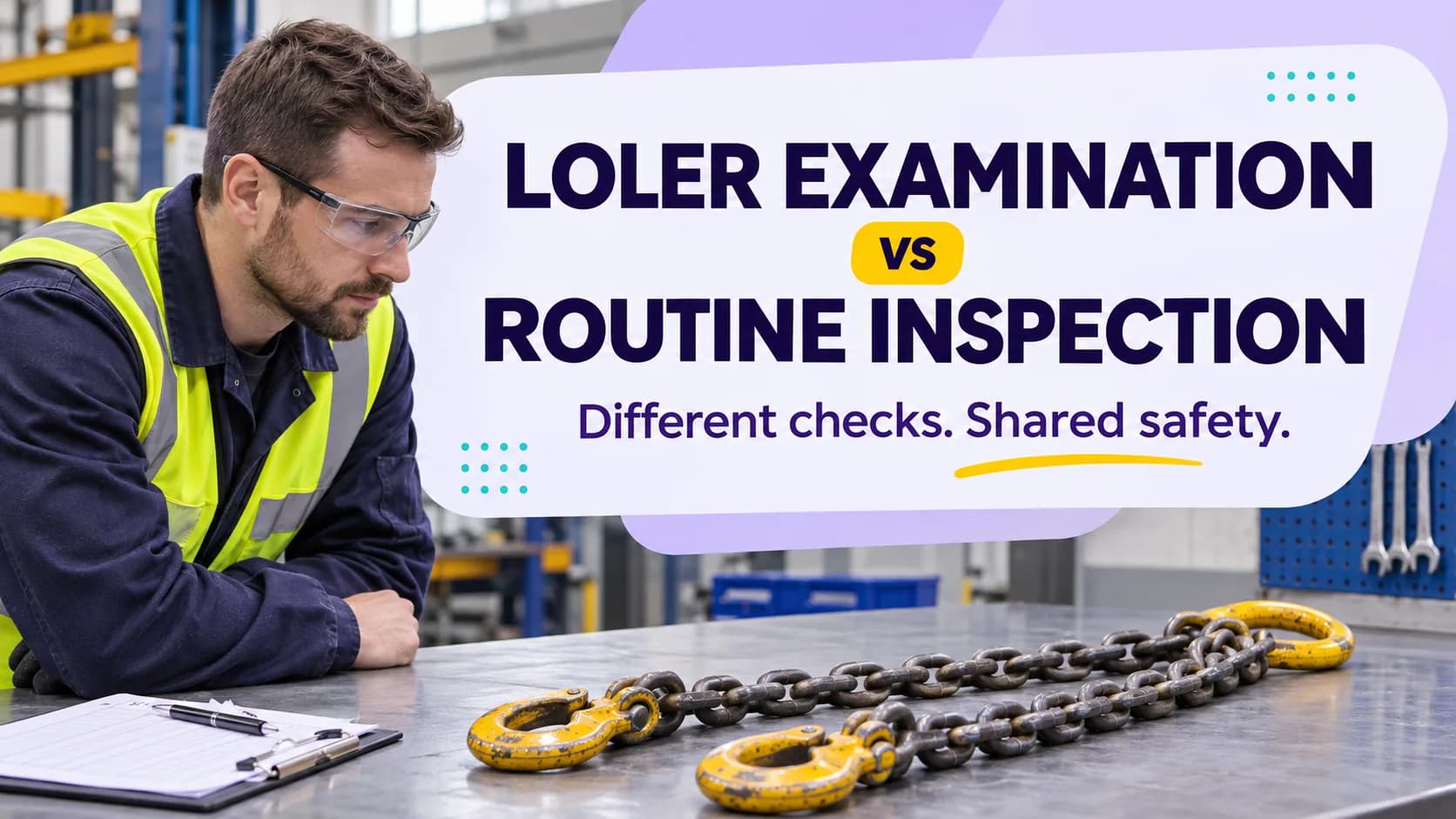
Editorial note: Researched and drafted with substantial AI assistance using the linked primary sources, checked on 16 November 2026. Source, scope and consistency checks were performed; no independent lifting specialist review or named author's participation has been verified. This is a limited management overview, not technical certification advice. The featured image is AI-generated illustration, not documentary evidence of an examination.
Frequently Asked Questions
No. Servicing maintains or repairs equipment. A thorough examination assesses defects and produces the required report. If both are commissioned, confirm who performed each activity and what each record covers.
No. Accessories and equipment used to lift people normally follow six-month intervals, while other lifting equipment normally follows twelve-month intervals, unless a competent person's examination scheme applies. Other examination triggers must also be considered.
Possibly, if they have the necessary equipment-specific competence and sufficient independence and impartiality. HSE advises that the examiner should not be the same person who routinely maintains the equipment.
Yes. Damage or deterioration can occur afterwards, and the report may contain restrictions or outstanding actions. Continue pre-use checks, necessary inspections and maintenance, and act on concerns immediately.
No. The competent person determines appropriate testing from the risks and technical information. Never improvise a load test or treat a test alone as proof that all examination requirements have been met.
Categories :